
Teams often use the words “proof of concept,” “prototype” and “product” as if they mean the same thing. They do not. Each represents a different level of learning, integration and readiness.
Knowing what you are building helps you choose the right tools, budget and test. It also prevents an early experiment from being mistaken for something ready to deploy.
Proof of concept: can the critical idea work?
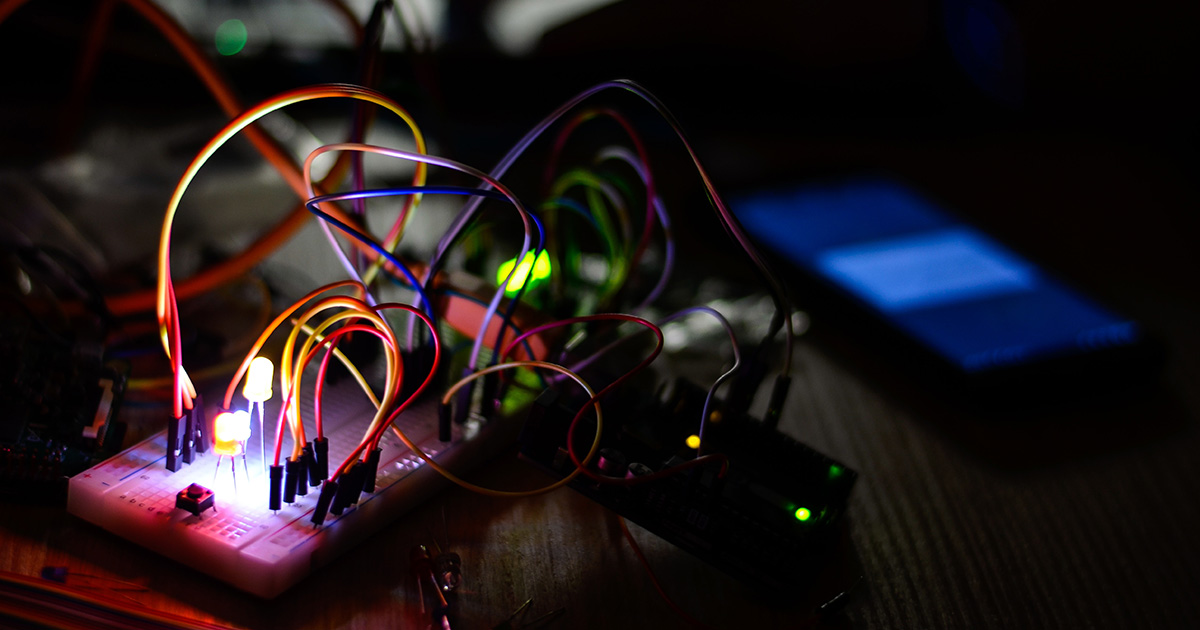
A proof of concept is a focused experiment that tests one important technical principle. It may use a breadboard, development board, simulation or temporary test fixture.
Its job is not to look polished. Its job is to answer a risky question quickly. Can the sensor detect the target material? Can the radio link operate over the required distance? Can the battery deliver the motor's peak current? Can the algorithm separate the signal from noise?
A good proof of concept produces evidence that helps the team continue, change direction or stop before spending more.
Prototype: how should the integrated solution work?
A prototype brings several functions together so the team can learn about the complete design. It may include integrated electronics, early firmware, a temporary enclosure and a simple user interface.
Depending on the question, a prototype might be:
- a functional breadboard used to tune sensors and control logic;
- an early custom PCB used to evaluate power, noise and interfaces;
- a mechanical mock-up used to check size and connector access; or
- a user-facing model used to test the workflow before final electronics are complete.
Prototypes are built to learn. They are expected to change.
Product: can it perform reliably in the real world?
A product goes beyond demonstrating the main function. It must work repeatedly and safely in its intended environment. It also needs a practical path for manufacture, assembly, sourcing, service and documentation.
A deployable electronic product may require:
- a reviewed custom PCB and production-ready files;
- a robust enclosure and mechanical mounting;
- repeatable firmware and programming procedures;
- protection against electrical and environmental conditions;
- a controlled bill of materials with approved substitutes;
- verification and validation records;
- assembly, test and troubleshooting instructions; and
- quality, safety and compliance planning.
Test the assumption that could kill the project
One of the best product-development habits is to identify the biggest uncertainty and test it first. Do not spend weeks perfecting a schematic if the core sensing method has not been demonstrated. Do not order a polished PCB before checking whether the proposed power source can handle peak demand.
A fast failed experiment is often cheaper than a beautiful failed PCB.
Examples of high-risk assumptions include:
- a sensor operating through the intended material or enclosure;
- a wireless connection working at the required range;
- a motor providing enough torque under real load;
- a battery meeting runtime and peak-current needs;
- components being available at the required cost; and
- target users understanding the interface.
Think in system blocks before detailed circuits
Before selecting every resistor, describe the product as functional blocks:
- Inputs: sensors, switches, user controls or external data.
- Processing: a microcontroller, processor, FPGA or dedicated logic running decision rules and control algorithms.
- Outputs: indicators, displays, buzzers, motors, pumps, valves, relays or transmitted data.
- Power: the source, regulation, protection and current budget.
- Communication: interfaces such as UART, I²C, SPI, CAN, USB, Bluetooth or Wi-Fi.
This architecture helps you decide what must be proven first and gives later schematic work a clear structure.
Document what every build teaches you
Keep a dated design log with calculations, pinouts, component decisions, test setups, measured results, failures, supplier links, photographs, code versions and unanswered questions. Documentation turns an unsuccessful experiment into reusable engineering knowledge.
Whether you are at proof-of-concept, prototype or product stage, CircuitWise Consults can help with electronics design, PCB development, testing and product realization.