
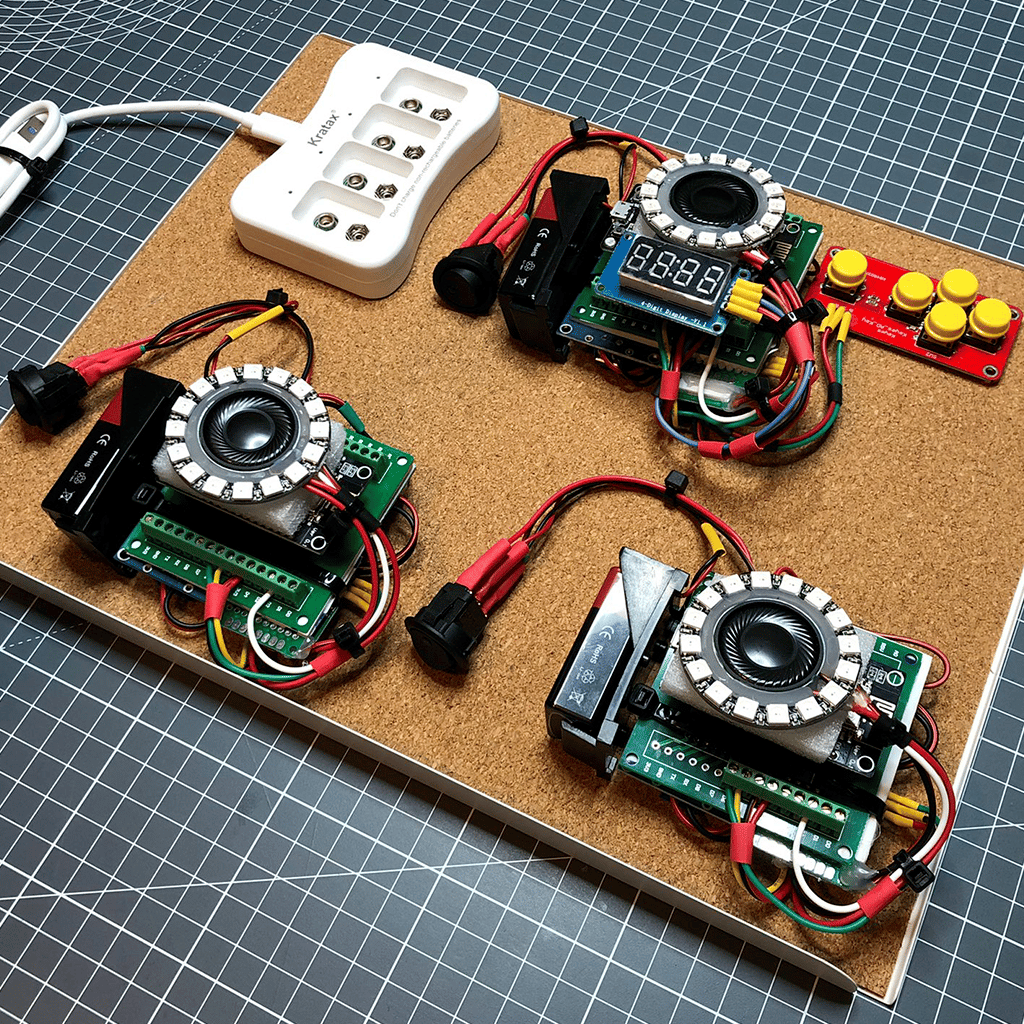
When people first learn electronics design, it is easy to treat the printed circuit board as the finish line. A neat schematic and a well-routed PCB are important, but they are only two outputs in a much larger process.
Electronic product development is the disciplined journey from a worthwhile problem to a solution that can be built, tested, improved and used reliably. It combines electronics with user needs, project planning, embedded software, mechanical design, sourcing, documentation and testing. If the product will be manufactured or sold, quality, compliance, service and commercialization also become part of the work.
Start with the problem, not the component
A common mistake is to begin with a favourite microcontroller, sensor or communication module and then search for a reason to use it. That reverses the logic of good engineering.
A stronger process begins by asking:
- Who experiences the problem?
- How is it handled today?
- Why is the current approach inadequate?
- What measurable improvement would create value?
- Can electronics genuinely improve the situation?
Only after those questions are understood should a team decide whether the solution needs sensing, control, computation, communication or actuation. The technology should serve the need, not define it.
The electronic product development lifecycle
The stages below are presented in a logical order, but real development is rarely linear. Testing, user feedback, component shortages and new constraints often send a team back to earlier decisions.
- Need or opportunity: identify a problem, risk, inefficiency or unmet need worth addressing.
- Planning: define the scope, schedule, budget, responsibilities, risks and expected deliverables.
- User and context research: understand the people involved, the environment and existing alternatives.
- Requirements and specifications: translate needs into measurable statements the design must satisfy.
- Concept generation and selection: explore several approaches and compare them using evidence.
- System architecture: organize the solution into functional blocks and define power, signals, interfaces and data flow.
- Schematic design: turn the selected architecture into a complete electrical definition.
- Proof of concept and prototyping: test critical functions before investing heavily in a final board.
- PCB design and build: place, route, fabricate and assemble the physical electronics.
- Verification and validation: confirm that the design meets its specifications and solves the intended user problem.
- Manufacture or deployment: prepare repeatable assembly, sourcing, quality, documentation, service and delivery.
Verification and validation are not the same
Verification asks, “Did we build the design right?” A verification test may check whether an alert activates within the specified distance, whether current consumption stays below a limit or whether a communication link reaches the required range.
Validation asks, “Did we build the right thing?” A board can pass every electrical test and still fail if users cannot understand it, maintain it or fit it into their daily work.
Why iteration is good engineering
A failed test is not automatically a failed project. It is new information. It may reveal that a requirement was unrealistic, a component was poorly selected, a signal path is noisy or the original problem was misunderstood.
Strong teams record what they learned, update the design and test again. Each cycle reduces uncertainty and makes the product more reliable.
A better definition of success
The goal is not simply to say, “The PCB works.” A successful development team should be able to explain:
- the problem the product addresses;
- the people and constraints that shaped it;
- the requirements used to make design decisions;
- the evidence showing that it performs as intended; and
- what should improve in the next revision.
That is the mindset CircuitWise Academy develops: problem → requirements → architecture → schematic → prototype → PCB → testing → product.
Ready to develop your idea?
Explore our CircuitWise Academy workshops or contact CircuitWise Consults for support with electronic product development, schematic design, PCB design and prototyping.